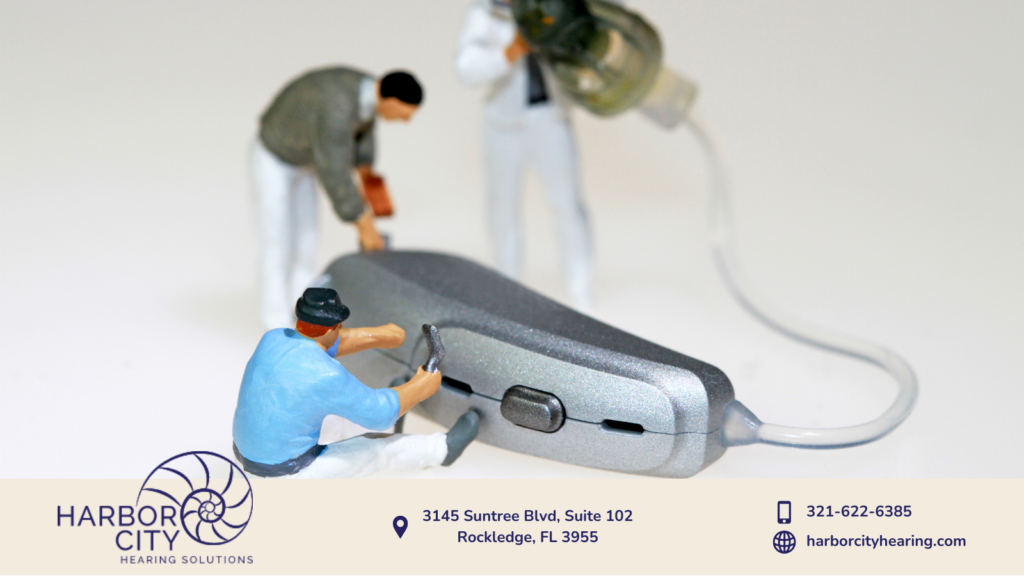


Harbor City Hearing Solutions audiologists in Melbourne, FL, are trained how to service hearing aids and provide tailored-fit hearing solutions.
When you acquire hearing aids, you are not just merely purchasing a device. Consider it as an investment towards better hearing. The secret to maintaining your hearing aids in good working order for the duration of their lifetime is regular maintenance. You must maintain a consistent nightly routine at home and schedule clean and check appointments with your audiologist, or a professional who knows how to service hearing aids.
If you think your hearing aids are not working as they should, you may have found yourself searching in Google ‘how to service hearing aids’ at one time or another. While basic troubleshooting may be helpful for minor issues, it’s still best to consult an audiologist if you suspect that your device needs servicing or repair.
How to Service Hearing Aids: Basic Hearing Aid Cleaning and Maintenance Tips
- Never skip daily device cleaning. Always clean the inside and outside of your hearing aids with a gentle, dry cloth. To reach all confined spaces, we advise utilizing a cleaning instrument or cleaning supply. Another excellent choice for keeping your electronics dry and prepared for each day is to use a dehumidifier.
- Keep hearing aids clean and dry. Hearing aids are frequently exposed to substances that could be harmful, such as lotions, hairsprays, rain, snow, dirt, debris, and dust. The likelihood of a problem decreases as you take more precautions to protect your hearing aids from the external elements.
- Seek professional advice. You should make an appointment with your audiologist whenever you have any doubts about whether you are getting the most benefit possible from your hearing aids. Due to the complexity of today’s technologies, poor programming and lack of hearing aid maintenance can significantly affect how effectively your hearing aids function.
- Be mindful of hearing aid accessories. Even the top hearing aids on the market may not always be sufficient. Instead of getting upset when you can’t hear as expected, discuss potential options with your audiologist. It is nearly always possible to address your concerns using either specialized programming methods or one of the many available hearing aid accessories.
How often should hearing aids be serviced?
Professionals who are trained how to service hearing aids would recommend at least six months to one year interval when it comes to hearing aid maintenance.
Depending on usage and care, a hearing aid can last between three and five years. In addition to cleaning your hearing aids every day, you should have a hearing healthcare specialist examine them every six months or so.
When To Take Your Hearing Aids To A Professional
We advise you to take your hearing aids to a specialist in hearing aids and related equipment if they are not functioning properly. Self-help solutions could make the issue worse. Anything that involves opening the hearing aids should be left to a professional. You can perform some basic troubleshooting on your own but other than that, it’s best to leave the complicated troubleshooting and hearing aid repairs to the experts.
Hearing Aid Services and Repair in Melbourne, FL
At Harbor City Hearing Solutions, we believe that well-maintained hearing leads to a better quality of life! We offer hearing aid repairs in Melbourne, FL.
In order to give you the comprehensive hearing healthcare you require, our team is skilled not only in the diagnosis, evaluation, and treatment of hearing issues but also in servicing hearing aids.
For any concerns or issues about the performance of your hearing aid, don’t hesitate to give us a call. Remember, it’s best to let a professional examine and repair your hearing aid rather than fiddle around with the device and risk further damage.
Call us today to make an appointment with hearing aid experts and audiologists in Melbourne, FL!